Definition.
Walking the talk is about being seen doing things that are in line with the principles that you preach. For the independent practitioner that translates as being a person who is benefiting from the excellent services and products that they are selling.
Benefits of Walking Your Talk.
In order for people to trust your services and products, they need to see that they can be applied in everyday life to good effect. Even better, if what is seen is that these services and products make life-changing enhancements! It follows therefore, that if one person can do it (you) then other people can do it as well (your potential clients).
Example of the benefits of walking your talk:
While I was accruing my professional qualifications that enabled me to be a highly skilled practitioner in the realm of coaching, counselling and therapy, I used my business mainly as a medium for advancing that professional advancement.
My focus was on being the most qualified and the most effective therapist that I could be. The money that I earned from seeing clients was ploughed straight beck in to the academic and vocational training programs that I embarked on. And without the benefit of my clients fees, I wouldn’t have been able to go on to the expensive advanced and specialised courses that I so enjoyed.
Once I got up to the high standard of professional knowledge and skills that I had set, the purpose of conducting business shifted over from accruing more skills and knowledge and into being a company that has both local and national clientele.
I did not know how I was going to make that change. So, I had a course of coaching to assist me in the following processes:
- identifying goals,
- diagnosing problems,
- choosing a direction,
- planning and taking action,
- overcoming barriers,
- measuring outcomes
- celebrating successes
i.e. people deserve to get what they want,
action can be taken to realise dreams and goals,
problems can be solved,
success can be enjoyed and celebrated.
Earlier on I said that if people see that one person has done it, then it is possible for other people to do it. Having used coaching to change my life for the better, is a way that I walked my talk. The message I gave out was, “Coaching works. Coaching worked for me and it can work for you. See, here are the results”.
When people see the results they believe in the effectiveness of the product and service. In seeing that you are the person who is benefiting from that which you are promoting (and that it is not merely a principle) then it takes people from the theory into the reality.
The next step on in their thinking is that they realise that you are the person from whom they will also get this benefit should they use the methods that you have used. Additionally, since you also supply such products / services, wouldn’t it make sense to obtain them from you?
Consequences of Not Walking Your Talk.
Not walking your talk may make people suspect that you cannot do it (implying that the services and products cannot bring about that effect that is claimed) or that you do not want to do it (implying that there is no value in the effects that the products and services bring about). These inferences will negatively affect the value of your products and services. As an independent practitioner it, not only makes good business sense to walk your talk, but also, you will benefit by enhancing your own life in a positive way.
Five ways to walk your talk:
The important thing to consider when thinking bout how to walk the talk is to realise that by its very definition it has to be genuine. A faked walk of a promoted talk wont fool anyone!
If the benefits of the services and products that you are selling are congruent with your core values and beliefs, however, then modelling / demonstrating the benefits to others will come naturally.
1). Make a firm commitment to your culture statement that you wrote earlier (compiled by the company mission and vision and purpose of doing business).
Continue to acknowledge and reward behaviours that are accordant, and address and modify discordant behaviours.
2). “Become the change that you want to see in the world”.
This famous quote from Mahatma Ghandi is useful in that what we are saying here, is look at what needs changing in people and / or organisations, and make that change within your self.
For example, if you think that the world is too easy for people who are lazy and unproductive, and that these people should just get a grip (a strong opinion, but I have heard it said) - look within yourself and address any complaints and excuses that are blocking you from taking actions, or stopping you getting what you want, or being who you want to be.
3). Help people achieve goals that are important to them, as well as accomplishing the goals that are important to you.
A win-win outcome is something that will result in a gain for both of you in exchange for your effort and work. The business model of an independent practitioner is that “I do something for you (provide a product / service that will enhance your life in some way) and you do something for me (pay me, in goods, services or money)”.
Having the intention of always looking for a win-win outcome in everyday interactions is a way of demonstrating your walking of your talk.
4). Do what you say that you are going to do.
Do not make rash promises that you cannot keep. You want people to trust they can buy your services and products and that these things will then do what they were sold to do. You do not promote your wares with exaggerated claims that cannot be actualised. It stands to reason, therefore, that if you do in person, what you say that you are going to do, and do not make impractical promises, then people will trust you also.
5). Whenever you use any communication tool, i.e. your voice, your blog, your website, your advertisements, your appearance, your body language, your attitude, then have this communication support the commitment to your culture statement that you made earlier. Always.
As stated at the beginning of this article, this is just a small sample of the content of my FREE coaching program called ‘Business Success for Independent Practitioners and Consultants’.
The actual coaching program has coaching exercises for you to do. Doing the coaching exercises assists in applying the material to your own business and benefits you in the form of gaining insights and helps you, the coachee, to generate ideas about what actions you can take to make your business better.
To benefit from this coaching now, go to http://www.nottingham-therapy.co.uk/ and look for the link to the FREE COACHING PROGRAM FOR INDEPENDENT PRACTITIONERS AND CONSULTANTS in the coaching section of the website. If you think that private coaching would enhance your life, or assist in identifying problems and / or generating solutions for you, please do get in touch, by giving me a call on 0115 962 230 between 8 am and 10 pm Monday to Friday, or email me vauna@nottingham-therapy.co.uk
I work to a diary of set session times, and the start time of these sessions are Monday to Friday 07-45 am to 9-10 pm. I would love to arrange a time in your diary that suits us both. As you know, I am an independent practitioner myself, offering personal and business coaching, counselling, psychotherapy, and NLP to people in person, and offering coaching to people over the telephone.
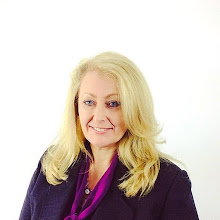
Additionally, I design and facilitate workshops, seminars and training courses in the field of personal development. I can also do a Training needs Analysis for you or your organisation and design a learning and development solution for you based on the findings and conclusions of that process. VAUNA BEAUVAIS Telephone 0115 962 0230 between 8am and 10 pm Monday to Friday
vauna@nottingham-therapy.co.uk
See a different professional profile of Vauna Beauvais
 View Vauna Beauvais's profile
Copyright 2008, Vauna Beauvais January 2008. No part of this article may be reproduced whether for financial gain or not. If you wish to refer to this article in your blog, internet article, or website, please ask for permission by contacting me on this email address vauna@nottingham-therapy.co.uk You may be granted permission to provide a link to this page, but reproduction of the complete article will not be permitted as it would remove the reason for a reader to visit this site. Thank you for your co-operation.


No comments:
Post a Comment